Communicating Science

Student Conference

Tartu, Estonia
4 June 2021

Program

Registration, Coffee

Opening

Keynote

Sweden Room – Speaker: Prof. Dr. Maria Murumaa-Mengel (ETIS profile)


How NOT to present your work

Maria Murumaa-Mengel (PhD in media and communication) is a social media lecturer in the institute of social studies, University of Tartu. In her keynote presentation, she will tell you academic horror stories (read: mistakes she has made) straight from the trenches (read: academic conferences). What if you fall down, flat on your face when approaching the stage? What if your brain freezes when coffee-chatting to a guru of your discipline and you blurt out something REALLY stupid? What if you forget the beginning of your talk? What if the carefully-put-together presentation just. Won’t. Friggin’ Start!? Maria has done and seen it all (ok, not ALL, but at least SOME) and learnt from it. She is happy to sum up the main points in a presentation „How NOT to present your work”, so perhaps all mistakes do not need to become lived experiences for the participants. Some will, for sure 🙂
Session 1

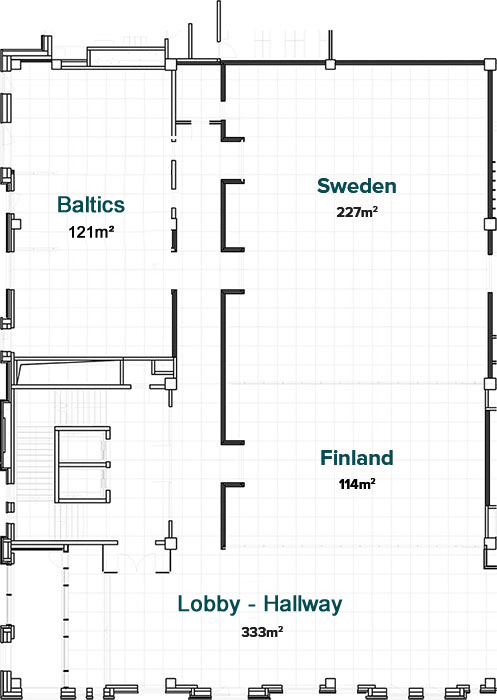
Panel 1 – Sweden Room (Live) – Chair: 

Name

Title

Faculty

Anti Alman
The Case for a Hybrid-Approach in Process Mining
Science and Technology
Alejandra Duque-Torres
Using Metamorphic Testing for Automatic Data Generation
Science and Technology
Darya Lapitskaya
Information and News Sentiments Impact on Initial Public Offering and Stock Returns. The Case of Facebook.
Social Sciences
Maria Medina
I went to a Hackathon and Nothing Happened. Why?
Science and Technology
Panel 2 – Finland Room (Live) – Chair: 
Muzayin Nazaruddin
The Role of Folklore in Shaping the Cultural Memory of a Natural Disaster
Arts and Humanities
Nele Dresen
The Utopian 1980s: The Role of New Religious Movements in the Revolutionary Processes in Estonia, 1987-1991
Arts and Humanities
Dario Tamburrano
Queering Tibetan Buddhism: The Personal Experience Narrative of Tashi Choedup
Arts and Humanities
Elli Marie Tragel
Catch Bull at Four: Towards Modelling Meditative Autocommunication
Arts and Humanities
Panel 3 – Baltics Room (Hybrid) – Chair: 
Laura Kirss
Multilingual School Programme Development – Unpacking the ’black box’
Social Sciences
Eric Roldan Roa
Pedagogical Agents as Teachable Agents: A Systematic Review from 2010 to 2020
Social Sciences
Priidik Gallagher
A Little on the Lambda and the CDM
Science and Technology
Mahmoud Shoush
Prescriptive Process Monitoring Under Resource Constraints: An Uplift Modeling Approach
Science and Technology

Coffee Break

Session 2

Panel 4 – Sweden Room (Live) – Chair: 
Danat Yermakovich
The Evolutionary History of Complex Traits
Science and Technology
Triin Veber
Health Impact Assessment of Transportation Noise in Two Major Estonian Cities
Medicine
Tanel-Sigmar Sildoja
Gastrointestinal Solubility: Theory, Practice and Implications
Science and Technology
Natàlia Pujol Gualdo
Genetic Association Analyses Identify Links Between Pelvic Prolapse (PP) and Connective Tissue Biology, Cardiovascular and Reproductive Health
Science and Technology
Panel 5 – Finland Room (Live) – Chair: 
Siim Sõkkal
The Mutiny at Sucro in 206 B.C. and the Rights of Roman Citizens
Arts and Humanities
Anna-Kristina Rätsep
Estonian Museums and People with Dementia: Experiences and Challenges
Arts and Humanities
Anna-Kati Pahker
Is Industrial Modernity Hollowing Out? Evidence from Australia, Germany, and Soviet Union/Russia, 1900-2020
Social Sciences
Anastasiia Pustovalova
Automation Complementarity to Interactive Skills and Wages of the Low-Skilled
Social Sciences
Panel 6 – Baltics Room (Hybrid) – Chair: 
Gerth Jaanimäe
Converting Historical Estonian Texts to Contemporary Estonian
Arts and Humanities
Liis Ermus
Prediction of Plosive Reduction from Written Text
Arts and Humanities
Milda Dailidėnaitė
Functions of Indirect Imperatives in Livonian and Latvian
Arts and Humanities
Valerii Otiakovskii
Constrained Writing: Literature as Mathematics
Arts and Humanities

Session 3

Panel 7 – Sweden Room (Live) – Chair: 
Eleonora Beccari
Assessing Plant Functional Diversity Using High Resolution Imagery
Science and Technology
Reti Ranniku
Greenhouse Gas Dynamics in Drained Peatlands: CH4 and N2O Fluxes from Tree Stems and Soil
Science and Technology
Gerli Albert
The Response of the Two Perennial and Two Filamentous Key Macroalgal Species to Elevated CO2 and Nutrient Concentrations in the Baltic Sea
Science and Technology
Jorma Rahu
Day-night Contrast in the Cloud Water Responses to Aerosols
Science and Technology
Panel 8 – Finland Room (Live: 3 Minute Thesis) – Chair: 
Ingrid Rebane
Fine-tuning for Comfort and Safety - the Chemists Way
Science and Technology
Ngan Vi Tran
Mechano-chemical Feedback Leads to Refinement of BMP Signalling During Cell Fate Specification
Science and Technology
Jan-Michael Cayme
The Chemistry of Past Material Remains
Science and Technology
Meruert Sarsenova
An Insight into Endometriosis
Medicine
Helina Maasing
How to Measure the Risk of Immigration Related Conflict?
Social Sciences
Maria Iqbal
Introduction into Family Language Policy among Estonian Tatars
Arts and Humanities
Panel 9 – Baltics Room (Hybrid) – Chair: 
Modar Sulaiman
Artificial Intelligence Bias in Face Recognition Technology
Science and Technology
Sigrid Aas
Estonian Defence Force Through Masculinity Discourse and Gender Perspective Lens
Social Sciences
Irina Siseykina
On the Peculiarities of Imagological Research Using Digital Tools
Arts and Humanities
George Spencer Terry
This Land is My Land: Discourses of America and Americanness
Social Sciences

Coffee Break

Session 4

Panel 10 – Sweden Room (Live) – Chair: 
Dmytro Danilian
Novel Antimicrobial Surfaces Based on Tio2 and Cu Nanoparticles by Impregnation Method
Science and Technology
Shahid Mubasshar
Vibration Analysis of Nanoarches with Defects
Science and Technology
Jonas Mart Linge
Oxygen Reduction on Silver Catalysts Electrodeposited on Various Nanocarbon Supports
Science and Technology
Rauno Sedrik
New Stiff Bio-based Polymers
Science and Technology
Shidong Chen
Classifying Archaeological Adhesives from Eastern Europe and Urals by ATR-FT-IR and Chemometric Analysis
Science and Technology
Panel 11 – Finland Room (Live: 3 Minute Thesis) – Chair: 
Ling Yan
Molecular and Functional Heterogeneity of Microglia and the Modulatory Effects of n-3 Polyunsaturated Fatty Acids in Mouse Depression-like Behaviors
Medicine
Sharath Kumar Goud Emmagouni
Investigating the Role of miRNA in the Regulation of Ovarian Folliculogenesis
Science and Technology
Matthew Kalkman
Imago Dei: Exploring Human Rights Foundations with Embodied Semiotics
Arts and Humanities
Ivan Ulises Kentros Klyszcz
Why Russia Cares About Afghanistan
Social Sciences
Bruno Paganeli
Using the Dark to Wake Up from the Invasion Nightmare
Science and Technology
Shan Wu
NetCalib: A Novel Approach for LiDAR-Camera Auto-Calibration based on Deep Learning
Science and Technology
Panel 12 – Baltics Room (Hybrid) – Chair: 
Mattia Bellini
Formal Organization and Complex Responses to Video Games Narratives
Arts and Humanities
Nikolai Shurakov
Epistemic Contextualism and Implicatures
Arts and Humanities
Andrew Mark Creighton
Nonhuman Animals and Implosion as Enchantment
Arts and Humanities
Ronalds Krams
Habitat and Social Group Impact on the Buff-Tailed Bumblebee (Bombus terrestris Linnaeus, 1758) Gut Bacterial Composition
Estonian University of Life Sciences
Lidiia Moskalenko
Pig Keeper's Attitude Towards African Swine Fever Control Measures in Estonia
Estonian University of Life Sciences

Closing Remarks

Venue

V Spa Conference Centre

Riia 2, 51004 Tartu

Tartu Ülikooli ASTRA projekti PER ASPERA toetab Euroopa Liidu Regionaalarengu fond.
University of Tartu ASTRA project PER ASPERA is funded by European Regional Development Fund.
Palun tutvu Tartu Ülikooli andmekaitsetingimustega: https://www.ut.ee/et/andmekaitsetingimused